
If you’re new to the USA and don’t have a Social Security Number (SSN), choosing the right credit card can be confusing.
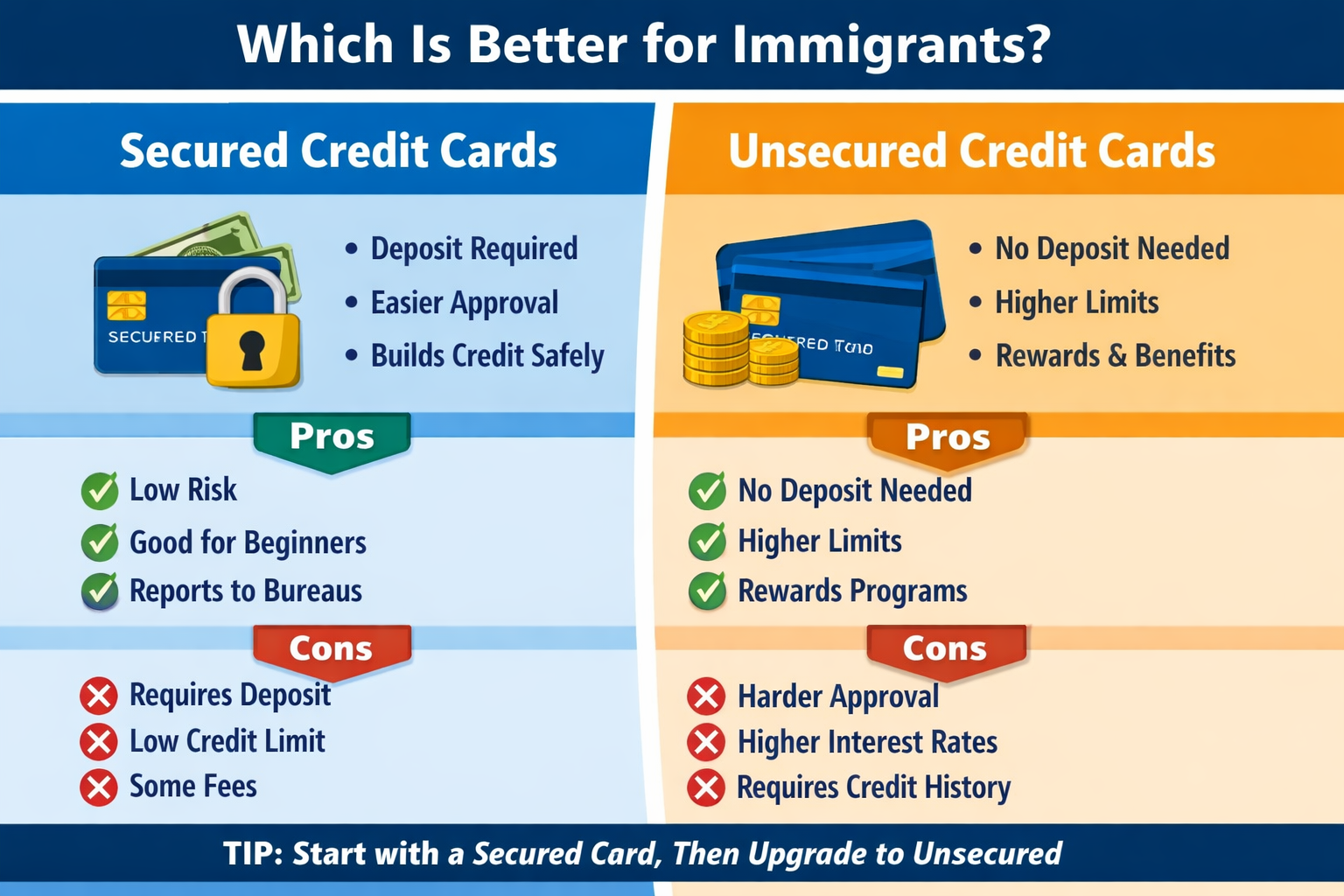
Credit cards generally come in two types: secured and unsecured. Understanding the difference between secured vs unsecured credit cards helps immigrants build credit safely and efficiently.
This guide explains the pros, cons, and best practices for each type.
What is a Secured Credit Card?
- Requires a refundable deposit, usually $200–$500
- Deposit acts as your credit limit
- Reports activity to all major credit bureaus
- Ideal for newcomers with no credit history
Pros
- Easier to get approved with ITIN
- Low risk for the bank
- Helps build credit fast if used responsibly
Cons
- Deposit is required upfront
- Usually lower credit limit
- Some cards have annual fees
What is an Unsecured Credit Card?
- No deposit required
- Credit limit is based on your financial profile
- Can be harder to get approved without credit history
- Reports to credit bureaus
Pros
- No upfront deposit
- Usually higher credit limit than secured cards
- Access to rewards programs and perks
Cons
- Harder to get for newcomers without credit history
- Higher interest rates if balance is not paid in full
Which One is Better for Immigrants?
- If you have no credit history: Start with a secured card
- If you have some credit history or ITIN approval: Consider unsecured cards
- Responsible usage (paying in full, low utilization) is more important than card type
Tip: Many newcomers start with a secured card and upgrade to an unsecured card after 6–12 months of responsible use.
How to Transition from Secured to Unsecured
- Use your secured card responsibly for 6–12 months
- Monitor your credit score
- Request an upgrade from your bank or apply for a new unsecured card
- Keep old accounts open to maintain credit history
A gradual transition strengthens your credit profile.
Related Guides
Choosing the right card is the first step to building credit in the USA.
Start with a secured card if you’re new, then upgrade to an unsecured card to maximize your credit opportunities.
Check our Credit Cards category for reviews and application tips for newcomers.